Lithium Discovery
Petalite (LiAlSi4O10) was discovered in 1800 by the Brazilian chemist and statesman José Bonifácio de Andrada e Silva in a mine on the island of Utö, Sweden. However, it was not until 1817 that Johan August Arfwedson, then working in the laboratory of the chemist Jöns Jakob Berzelius, detected the presence of a new element while analyzing petalite ore. This element formed compounds similar to those of sodium and potassium, though its carbonate and hydroxide were less soluble in water and less alkaline. Berzelius gave the alkaline material the name “lithion/lithina“, from the Greek word λιθoς (transliterated as lithos, meaning “stone”), to reflect its discovery in a solid mineral, as opposed to potassium, which had been discovered in plant ashes, and sodium, which was known partly for its high abundance in animal blood. He named the new element “lithium”.
Source > Wikipedia.org
What Is Lithium?
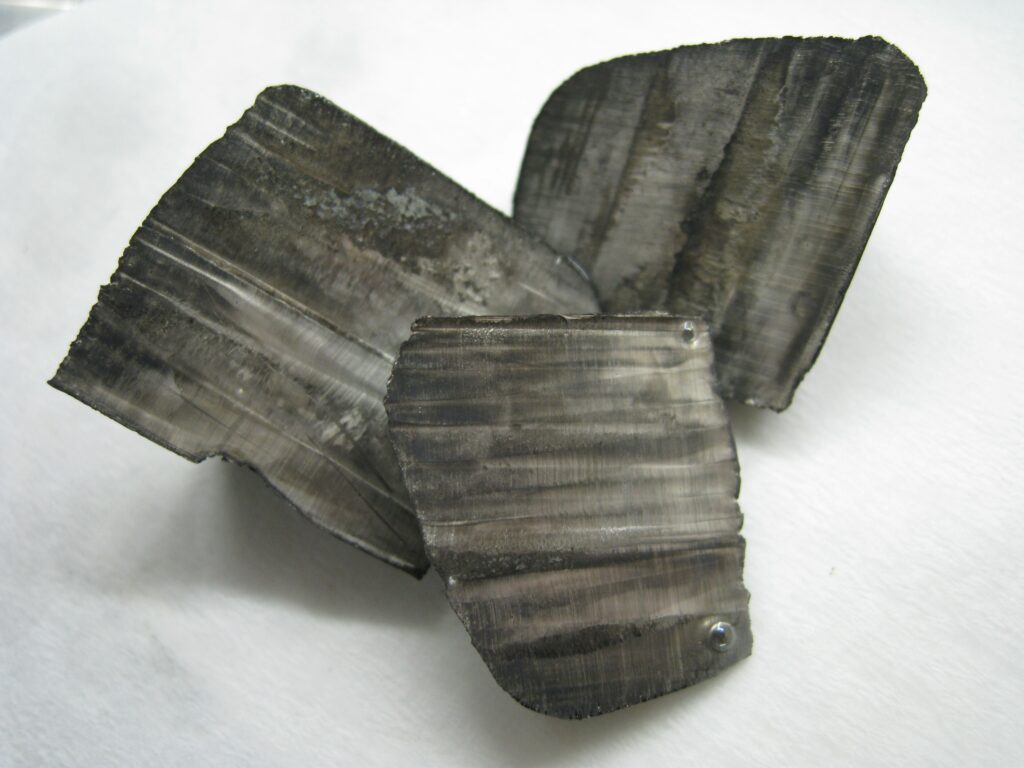
Lithium is a chemical element with the symbol Li and atomic number 3. It is the lightest metal and one of the least dense solid elements known. With a silvery-white appearance, lithium is soft enough to cut with a knife, although it reacts readily with air and moisture. For this reason, it is usually stored under mineral oil or in controlled environments containing Argon gas, vacuum chambers and other applied methods.
Key Properties and Natural Sources
As an alkali metal, lithium is highly reactive and does not occur freely in nature. Instead, it is found in mineral deposits and concentrated brine beneath salt flats. Producers extract it through mining or evaporation and chemical processing. Lithium compounds are valued for their low weight, high heat capacity, and ability to participate in electrochemical reactions.
Why Lithium Matters
The element has become especially important in rechargeable batteries used in phones, laptops, electric vehicles, and energy-storage systems. Lithium-ion batteries combine relatively high energy density with a useful balance of weight, performance, and rechargeability. These advantages have made them central to the transition toward electric transportation and renewable energy.
Safety and Sustainability
Pure lithium must be handled carefully because it can react violently with water. Battery systems also require proper design, monitoring, recycling, and disposal to reduce fire risks and environmental impacts. Growing demand has increased attention on water use, mining practices, supply chains, and battery recovery. Research into sodium-ion batteries, improved recycling, and more efficient extraction may help reduce pressure on lithium resources.
Although it is a small and highly reactive metal, lithium has an outsized role in modern life. Understanding its chemistry and limitations is essential for using this valuable element responsibly.
Properties
- Atomic Number: 3
- Atomic mass: [6.938, 6.997] 6.94±0.06
- Element Symbol: Li
- Half-life: (t1/2) – stable
- Melting point: 453.65 K (180.50 °C, 356.90 °F)
- Boiling point: 1617 K (1344 °C, 2451 °F)
- Density: 0.5334 g/cm
- Type: Alkali metal
This post was written with AI and edited by human!